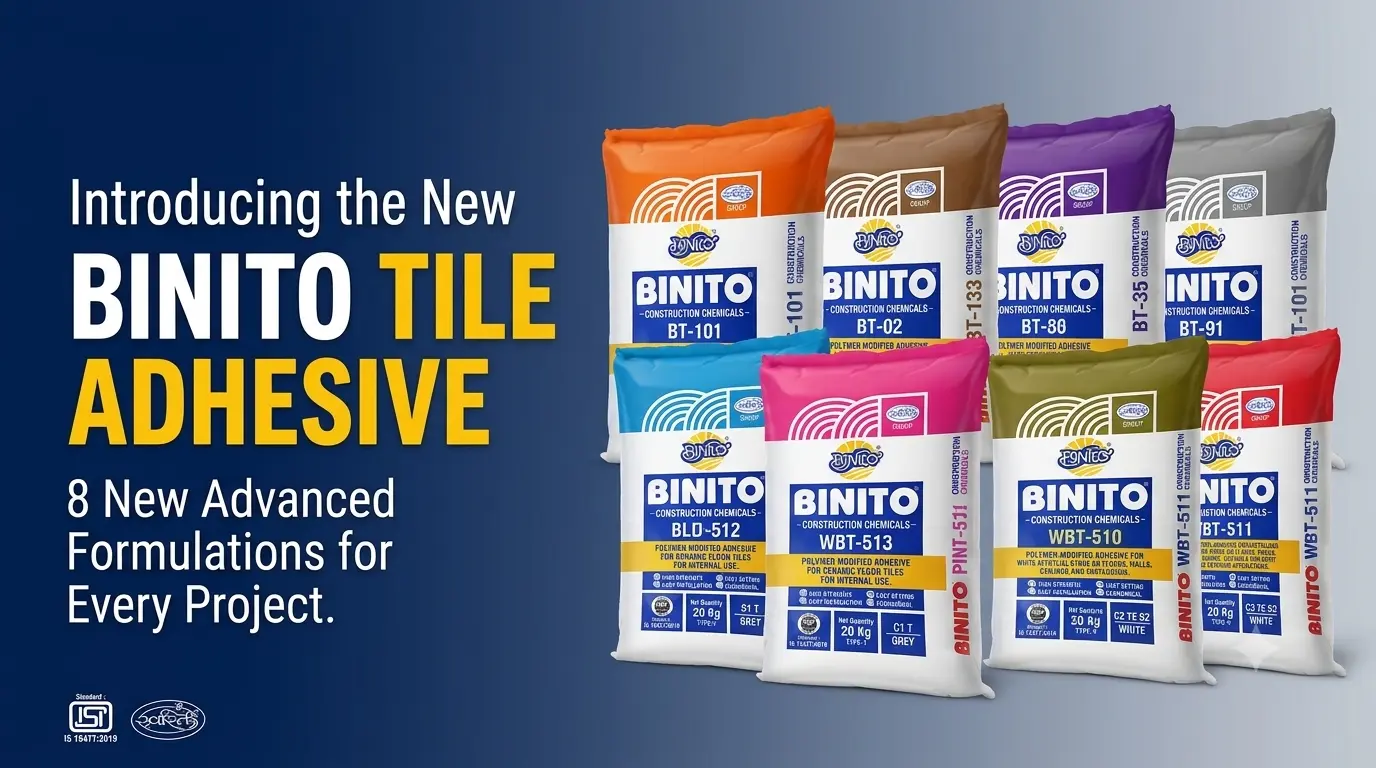
How to Choose the Best Tile Adhesive for Your Project
Selecting the best tile adhesive is essential for strong bonding, long-lasting performance and reliable tile installation. Whether you are constructing a new home, renovating a bathroom or working on a commercial project, choosing the right adhesive depends on the tile material, size, substrate and installation conditions.
1. Understand the Different Types of Tile Adhesive
Standard Tile Adhesive
Standard-performance adhesives may be suitable for certain ceramic tiles and conventional substrates. Always check the manufacturer's technical data sheet for approved applications.
Improved-Performance Tile Adhesive
Improved-performance adhesives are designed to meet higher specified performance requirements. Depending on their classification, they may be suitable for low-absorption tiles and more demanding installation conditions.
Specialised Tile Adhesive
Some applications, including large-format tiles, natural stone, exterior installations and challenging substrates, may require specialised adhesive products. Confirm suitability with the manufacturer.
2. Choose Adhesive According to Tile Material
Ceramic Tiles
Many ceramic tiles can be installed using a suitable cement-based tile adhesive. Selection depends on tile absorption, substrate and installation location.
Porcelain and Vitrified Tiles
Porcelain and vitrified tiles generally have low water absorption. Choose an adhesive specifically recommended for the tile type, dimensions and installation conditions.
Natural Stone and Marble
Natural stone can be sensitive to moisture, staining or discolouration. Check compatibility and use a specifically recommended adhesive where required.
Large-Format Tiles
Large-format tiles require careful substrate preparation, appropriate adhesive selection and adequate adhesive coverage. For wall installations, confirm suitability for the tile weight and vertical application.
3. Select Adhesive for Floors, Walls and Wet Areas
Floor Tiles
Select an adhesive suitable for the tile, substrate and expected service loads. Commercial floors and areas subject to movement may require higher-performance products.
Wall Tiles
Wall installations may require reduced-slip properties, especially when installing heavy or large-format tiles. Follow the product's application instructions.
Bathrooms and Wet Areas
Choose an adhesive suitable for the intended wet-area application. Tile adhesive does not automatically replace a waterproofing membrane. Install a compatible waterproofing system wherever required.
Outdoor Areas
Outdoor tiling may be exposed to rain, heat and temperature changes. Use a product specifically recommended for the application and address drainage, waterproofing and movement joints as required.
4. Understand Tile Adhesive Classifications
In India, IS 15477:2019 is a relevant standard for adhesives used with ceramic, mosaic and stone tiles. Some products also use classifications under EN 12004. These classification systems should not be treated as directly interchangeable.
- C: Cementitious adhesive under EN 12004.
- C1: Standard-performance cementitious adhesive.
- C2: Improved-performance cementitious adhesive.
- T: Reduced slip.
- E: Extended open time.
- F: Fast setting.
- S1: Deformable.
- S2: Highly deformable.
Always verify product classifications and claims against the applicable standard and the manufacturer's technical documentation.
5. Check the Substrate Before Installation
The substrate must be sound, sufficiently cured, clean and free from dust, grease and loose material. Ensure the surface is sufficiently flat for the tile size. Repair uneven or weak surfaces using an appropriate preparation system rather than relying on excessive adhesive thickness.
6. Compare Important Performance Properties
- Adhesion strength: The ability to achieve the specified bond under defined test conditions.
- Open time: The period during which the applied adhesive can achieve the specified bonding performance.
- Slip resistance: Helps limit tile movement during vertical installation.
- Deformability: May be important where the installation experiences movement or temperature changes.
- Environmental suitability: Confirm suitability for moisture, weather exposure and the intended service conditions.
7. Tile Adhesive vs Traditional Cement-Sand Mortar
| Feature | Traditional mortar | Cement-based tile adhesive |
|---|---|---|
| Composition | Cement, sand and water | Formulated cement-based mix with selected additives |
| Application | Depends on the installation method | Generally applied with a suitable notched trowel |
| Tile compatibility | Depends on tile and installation method | Depends on verified product suitability |
| Low-absorption tiles | May not suit many applications | Suitable options are available |
The correct choice depends on the tile, substrate, approved installation method and project requirements.
8. Calculate Tile Adhesive Consumption
Required adhesive (kg) = Area (m²) × Consumption rate (kg/m²)
For example, if the area is 100 m² and the selected product's estimated consumption is 4 kg/m², the estimated requirement is 400 kg. For 20 kg bags, this equals 20 bags before any additional allowance for site conditions or wastage.
This is an illustrative example. Actual consumption depends on the product, trowel, tile dimensions, substrate flatness and installation technique. Use the manufacturer's consumption guidance.
9. Common Tile Adhesive Selection Mistakes
- Choosing a product based on price alone.
- Ignoring tile absorption and dimensions.
- Using the same adhesive for every application without checking suitability.
- Applying adhesive over a weak, dusty or uneven substrate.
- Adding more water than the manufacturer recommends.
- Installing tiles after the adhesive has developed a dry surface skin.
- Assuming tile adhesive replaces waterproofing.
- Ignoring movement joints and installation instructions.
10. Tile Adhesive Buying Checklist
- Identify the tile material and dimensions.
- Confirm whether the installation is on a floor or wall.
- Check indoor, outdoor and wet-area exposure.
- Assess substrate condition and preparation requirements.
- Verify product classification and technical data.
- Estimate consumption using manufacturer guidance.
- Consult a qualified professional for specialised applications.
Frequently Asked Questions
Which tile adhesive is best for home flooring?
The best adhesive depends on the tile, substrate and expected use. Select a product approved for the specific installation conditions.
Which adhesive is suitable for porcelain tiles?
Choose an adhesive specifically recommended for low-absorption porcelain tiles and suitable for the tile dimensions and substrate.
Is tile adhesive waterproof?
Not necessarily. Tile adhesive and waterproofing membranes serve different purposes. Use a compatible waterproofing system where required.
How much tile adhesive is required per square metre?
Consumption varies by product, tile size, trowel and substrate. Follow the manufacturer's stated consumption rate.
What does C2TE mean?
Under EN 12004, C2 indicates improved-performance cementitious adhesive, T indicates reduced slip and E indicates extended open time.
Can tile adhesive be used outdoors?
Some products are suitable for specified outdoor applications. Verify the product's technical documentation before use.
Conclusion
Choosing the best tile adhesive means matching the product to the tile, substrate, installation location and expected service conditions. Correct product selection, surface preparation and installation practices contribute to reliable tile bonding.
At Binito® Construction Chemicals, we believe informed product selection and proper installation practices are essential for dependable construction results. Consult the relevant product technical data sheet or visit Binito Construction Chemicals for further information.
Binito® Construction Chemicals — Engineered for Strength. Formulated to Last.