Tile Adhesive: Types, Uses, Benefits and Complete Buying Guide
Tiles are an essential part of modern residential, commercial, and industrial construction. From elegant living room floors and contemporary bathroom walls to commercial spaces and exterior surfaces, tiles provide durability, visual appeal, and easy maintenance. However, the long-term performance of a tiled surface depends on more than the quality of the tiles themselves. The bonding material used to install them plays an equally important role.
Tile adhesive is a specially formulated bonding material designed to fix ceramic, vitrified, porcelain, natural stone, and other compatible tiles onto suitable surfaces. Choosing the right tile adhesive can help improve bonding performance, installation consistency, and the durability of the finished surface. In this comprehensive guide, we explain the different types of tile adhesive, their uses and benefits, technical classifications, application methods, and the important factors to consider before purchasing a product.
1. What Is Tile Adhesive?
Tile adhesive is a bonding material used to fix tiles onto suitable substrates such as concrete, cement plaster, cement screeds, and other approved surfaces. It is commonly available as a dry powder that is mixed with a specified quantity of water before application. Specialist adhesives may also be available as ready-to-use pastes or multi-component systems.
Cement-based tile adhesives typically contain a combination of cement, mineral fillers, and performance-enhancing additives.
- Cement: Acts as the primary binder and contributes to bonding strength.
- Mineral fillers: Help control consistency, workability, and application properties.
- Polymer additives: Can improve adhesion and contribute to flexibility, depending on the formulation.
- Water-retention additives: Help maintain workable consistency and support cement hydration.
- Special performance additives: May improve open time, reduce slip, accelerate setting, or provide other application-specific properties.
How Does Tile Adhesive Work?
When mixed correctly, cement-based tile adhesive forms a workable paste that can be spread over a prepared substrate using a notched trowel. The tile is pressed into the adhesive to establish adequate contact. As the adhesive hardens, it develops a bond between the tile and the underlying surface.
Successful installation depends on selecting a suitable adhesive, preparing the substrate properly, applying the product within its specified working time, and achieving the required adhesive coverage.
2. Types of Tile Adhesive
2.1 Standard Cement-Based Tile Adhesive
Standard cement-based tile adhesive is commonly used for conventional tile installation on suitable cementitious substrates.
Typical applications:
- Interior ceramic floor tiles.
- Small and medium-sized tiles.
- Suitable interior wall applications.
- Residential projects with properly prepared cement plaster or concrete.
Benefits:
- Convenient mixing and application.
- Consistent formulation compared with on-site proportioning of separate materials.
- Suitable for many routine tiling applications.
- Often an economical option for standard projects.
The product must be approved for the specific tile type, installation location, and substrate.
2.2 Improved Cement-Based Tile Adhesive
Improved cement-based adhesives are designed to provide enhanced performance compared with normal cementitious adhesives. Depending on their classification, they may offer improved adhesion, extended open time, reduced slip, or other specified properties.
Typical applications:
- Vitrified and porcelain tiles, where approved.
- Residential and commercial floors.
- Suitable wall installations.
- Projects requiring improved bonding performance.
Benefits:
- Improved adhesion performance.
- Greater suitability for certain low-absorption tiles.
- Better installation control when the required properties are specified.
- Availability of products designed for more demanding applications.
2.3 High-Performance Tile Adhesive
High-performance tile adhesives are developed for installations that demand specific bonding characteristics or enhanced performance.
Typical applications may include:
- Large-format porcelain tiles.
- Selected exterior installations.
- Commercial tiling projects.
- Certain demanding substrates or service conditions.
The correct product depends on the tile, substrate, installation environment, and manufacturer's technical recommendations.
2.4 Flexible Tile Adhesive
Flexible tile adhesive is designed to accommodate a specified degree of deformation within the tile-bonding system.
Typical applications may include:
- Certain large-format tile installations.
- Approved underfloor-heating systems.
- Selected exterior applications.
- Certain renovation projects over existing tiles.
- Installations requiring enhanced deformation tolerance.
Flexible adhesive does not eliminate the need for a stable substrate, correctly designed movement joints, or appropriate waterproofing.
2.5 Tile Adhesive for Bathrooms and Wet Areas
Bathrooms, showers, kitchens, and utility rooms require careful product selection because moisture exposure can affect the complete tiling system.
Typical applications:
- Bathroom floors and walls.
- Shower installations using an approved system.
- Kitchen backsplashes.
- Laundry rooms and utility areas.
Important: Tile adhesive should not automatically be considered a waterproofing product. Showers, bathrooms, balconies, and other water-exposed areas may require a separate waterproofing membrane and appropriate construction detailing.
2.6 Tile Adhesive for Outdoor Applications
Outdoor tiles may experience rain, temperature fluctuations, direct sunlight, and substrate movement. These conditions can place additional stress on the bonding system. Use a product specifically approved for the intended exterior application.
Typical applications may include:
- Selected balconies and terraces.
- Exterior floors.
- Approved external wall tiling systems.
- Other exposed surfaces specified by the manufacturer.
Correct drainage, substrate preparation, waterproofing where required, and movement joints remain essential.
2.7 Epoxy Tile Adhesive
Epoxy tile adhesive is a resin-based adhesive system that generally consists of multiple components mixed before application. It is used for specialised applications where its particular chemical or mechanical properties are required.
Typical applications may include:
- Selected industrial facilities.
- Certain commercial kitchens and food-processing environments.
- Areas exposed to specified chemicals.
- Specialised installations requiring a compatible epoxy system.
Epoxy products generally involve higher material costs and more demanding installation and cleaning procedures than standard cement-based adhesives.
3. Understanding Tile Adhesive Classifications
One of the most important considerations when buying tile adhesive is its technical classification. The EN 12004 classification system identifies different categories of tile adhesives and their tested performance characteristics.
| Classification | General Meaning |
|---|---|
| C1 | Normal cementitious adhesive. |
| C2 | Improved cementitious adhesive. |
| T | Reduced slip. |
| E | Extended open time. |
| F | Fast-setting adhesive. |
| S1 | Deformable adhesive. |
| S2 | Highly deformable adhesive. |
What Does C1 Tile Adhesive Mean?
C1 identifies a normal cementitious adhesive classification under the relevant standard. Such products may be suitable for specified conventional applications when the tile, substrate, and installation conditions are compatible.
What Does C2 Tile Adhesive Mean?
C2 identifies an improved cementitious adhesive classification. It is often considered for applications requiring improved bonding performance, subject to the product's complete classification and approved uses.
What Does C2TE Mean?
C2TE identifies an improved cementitious adhesive with reduced slip and extended open time under the applicable classification system.
What Does C2TES1 Mean?
C2TES1 identifies an improved cementitious adhesive with reduced slip, extended open time, and deformable performance.
For projects in India, check applicable Indian standards and project specifications. IS 15477:2019 relates to adhesives for use with ceramic tiles. Verify the relevant product documentation before making compliance claims.
4. Major Uses of Tile Adhesive in Construction
Residential Construction
- Living room and bedroom floors.
- Kitchen floors and walls.
- Bathroom floors and walls.
- Selected balcony and utility-area installations.
Commercial Buildings
Offices, retail stores, hotels, restaurants, and other commercial facilities may require adhesives that meet specific requirements for traffic, tile dimensions, substrate conditions, and cleaning procedures.
Large-Format Tile Installation
Large-format tiles require careful attention to substrate flatness and adhesive coverage. Appropriate trowel selection and back-buttering may be necessary to achieve the required contact.
Natural Stone Installation
Natural stone can be sensitive to moisture, staining, and colour changes. Some stones require specialist adhesives or white adhesive to reduce the risk of discoloration. Always confirm compatibility with the stone manufacturer.
Renovation and Tile-on-Tile Applications
Some adhesives are approved for installing new tiles over existing tiles. These applications require a stable existing surface, correct cleaning, and any specified primers or surface preparation. Not every tile adhesive is suitable for tile-on-tile installation.
5. Benefits of Using Tile Adhesive
5.1 Consistent Product Performance
Factory-formulated adhesives are manufactured to defined specifications, helping reduce variability associated with on-site proportioning of cement, sand, and additives.
5.2 Compatibility with Modern Tiles
Porcelain and vitrified tiles often have low water absorption. Suitable formulated adhesives can provide the bonding characteristics required for these tiles.
5.3 Improved Workability
A properly formulated adhesive offers a workable consistency that helps installers spread the product and position tiles according to the specified installation procedure.
5.4 Reduced Slip for Wall Tiles
Adhesives classified for reduced slip help limit the downward movement of tiles during installation when used as directed.
5.5 Application-Specific Performance
Different formulations are available for standard tiling, extended open time, fast setting, deformability, and other performance requirements.
5.6 Potentially Improved Installation Efficiency
Pre-formulated products reduce the need to proportion multiple raw materials at the job site. Actual productivity depends on installation conditions, product choice, and installer experience.
6. Tile Adhesive vs Cement and Sand
| Feature | Tile Adhesive | Traditional Cement-and-Sand Mortar |
|---|---|---|
| Composition | Factory-formulated. | Mixed from separate materials. |
| Preparation | Usually mixed with specified water. | Requires proportioning and mixing. |
| Modern porcelain tiles | Suitable when specifically approved. | May be unsuitable for many low-absorption tiles. |
| Application | Generally controlled by product specifications. | Depends on the specified mortar-bed method. |
| Consistency | More controlled when correctly manufactured and used. | Depends on batching and workmanship. |
| Cost comparison | Depends on bag price and consumption. | Depends on materials, labour, and installation method. |
Which Option Should You Choose?
For many modern ceramic, vitrified, and porcelain tile installations, a suitable tile adhesive is often the preferred choice. Traditional mortar may be appropriate for certain installations specifically designed around a mortar-bed method.
The decision should be based on tile-manufacturer recommendations, substrate conditions, project specifications, and total installed cost.
7. Complete Tile Adhesive Buying Guide
Step 1: Identify the Tile Material
- Ceramic tiles: Choose an adhesive approved for the tile and installation location.
- Vitrified tiles: Check suitability for the tile's absorption characteristics.
- Porcelain tiles: Consider products approved for low-absorption tiles.
- Natural stone: Confirm compatibility and staining risks.
- Large-format tiles: Review bonding requirements, substrate flatness, and coverage recommendations.
Step 2: Determine the Installation Location
| Location | Important Selection Criteria |
|---|---|
| Interior floor | Tile compatibility and floor-substrate suitability. |
| Interior wall | Wall application approval and slip resistance. |
| Bathroom or shower | Wet-area compatibility and waterproofing requirements. |
| Balcony or terrace | Exterior suitability and movement considerations. |
| Exterior wall | Approved external installation system. |
| Swimming pool | Explicit approval for continuous immersion and the complete system. |
| Industrial facility | Compatibility with service conditions and chemical exposure. |
Step 3: Check the Technical Classification
Review the adhesive's complete classification and technical data sheet. A C2-class adhesive may be suitable for some demanding tile installations, while S1 or S2 deformation characteristics may be important where movement tolerance is required. Do not select a product based on classification alone. Verify that it is approved for the exact application.
Step 4: Consider Tile Size and Weight
Large-format or heavy tiles may require specific adhesive properties and installation methods. Check the maximum recommended tile dimensions, wall or floor suitability, application thickness, trowel requirements, and whether back-buttering is recommended.
For heavy exterior wall cladding, additional mechanical fixing may be required by the approved installation system.
Step 5: Evaluate the Substrate
The surface should be sound, stable, clean, and suitable for tiling. Common substrates include concrete, cement plaster, cement screeds, and other approved surfaces.Dust, oil, loose material, weak plaster, and excessive unevenness can compromise bonding. Follow the manufacturer's requirements for primers and surface preparation.
Step 6: Review Working Time
- Pot life: The approximate period the mixed adhesive remains usable in the container.
- Open time: The period after spreading during which tiles can be properly bonded under specified conditions.
- Adjustment time: The period during which a placed tile can be repositioned.
- Setting time: The time required for the adhesive to develop sufficient set for the specified next stage of work.
High temperatures, wind, and low humidity may reduce practical working time during installation.
Step 7: Compare Coverage and Total Cost
The lowest-priced bag is not always the most economical option. Compare price per bag, bag weight, estimated consumption per square metre, product suitability, labour requirements, transportation, and wastage.
Calculate the total expected material requirement before finalising the purchase.
Step 8: Verify Product Documentation
Before buying, review the technical data sheet, product classification, mixing ratio, coverage guidance, shelf life, storage conditions, and recommended applications. Choose a product with clear technical documentation and appropriate manufacturer support.
8. How to Apply Tile Adhesive Correctly
Step 1: Prepare the Substrate
Remove dust, grease, loose material, and other contaminants. Repair weak areas and ensure that the substrate meets the specified strength, flatness, and moisture requirements.
Step 2: Mix the Adhesive
Use a clean container, clean water, and the manufacturer's specified mixing ratio. Gradually add the powder to the water and mix until a uniform consistency is achieved. Allow the mixture to stand and remix if required by the instructions.
Do not add extra water to adhesive that has started to set.
Step 3: Spread the Adhesive
Apply a contact layer using the flat side of the trowel. Comb the adhesive using the recommended notched trowel, maintaining consistent ridges. Spread only the amount that can be covered within the adhesive's open time.
Step 4: Place the Tiles
Press the tiles into the adhesive with the movement required to collapse the ridges and achieve adequate contact. For large-format tiles or demanding applications, back-buttering may be necessary. Periodically lift a tile to check adhesive coverage.
Step 5: Maintain Tile Joints
Use appropriate spacers and follow the installation layout. Provide movement joints wherever required by the design and relevant installation guidance.
Step 6: Allow Sufficient Setting Time
Protect the installation from disturbance. Follow the manufacturer's recommendations for grouting, foot traffic, loading, and exposure to water.
9. Common Tile Adhesive Problems and Their Prevention
Loose or Debonded Tiles
Possible causes: Poor surface preparation, inadequate adhesive coverage, incorrect adhesive selection, or substrate movement.
Prevention: Prepare the substrate properly, use a compatible product, and check adhesive coverage during installation.
Tiles Slipping on Walls
Possible causes: Insufficient slip resistance, incorrect mixing, or use outside the product's approved application limits.
Prevention: Select an appropriate reduced-slip adhesive and follow the mixing and installation instructions.
Hollow-Sounding Tiles
Possible causes: Incomplete adhesive contact, voids beneath the tiles, or problems with the substrate or installation method.
Prevention: Use the correct trowel technique, achieve the required coverage, and check tiles during installation. A hollow sound alone does not always establish that a tile has failed.
Adhesive Drying Too Quickly
Possible causes: High temperatures, strong airflow, large spread areas, or exceeding the open time.
Prevention: Work in manageable sections and avoid installing tiles onto adhesive that has developed a dry skin. Follow the manufacturer's procedure for removing and replacing unsuitable adhesive.
Cracked Tiles or Grout
Possible causes: Substrate movement, inadequate support, missing movement joints, or an unsuitable installation system.
Prevention: Ensure substrate stability and provide the movement joints required by the design.
10. How Much Tile Adhesive Is Required per Square Metre?
Tile adhesive consumption depends on tile dimensions, substrate flatness, trowel notch, tile-back profile, and application thickness.
For preliminary planning, consumption may be around 3–5 kg per square metre for some installations. Actual consumption can be lower or higher, depending on the product and site conditions. Always check the manufacturer's technical data sheet.
Example Calculation
Suppose the total tiled area is 100 square metres and estimated adhesive consumption is 4 kg per square metre.
- Total adhesive required: 100 m² × 4 kg/m² = 400 kg.
- Bag size: 20 kg.
- Estimated number of bags: 400 kg ÷ 20 kg = 20 bags.
This is an estimate before any additional allowance for wastage or site-specific variations. Confirm actual consumption through the product data and, where appropriate, a site trial.
11. Tile Adhesive Price: What Determines the Cost?
Tile adhesive prices vary according to formulation, classification, raw materials, packaging, brand, location, and order quantity. A standard cementitious adhesive and a high-performance deformable adhesive are designed for different requirements and may have different prices.
When comparing products, consider:
- Price per bag and bag weight.
- Expected consumption per square metre.
- Adhesive classification.
- Approved applications.
- Technical support and product documentation.
- Transportation and dealer costs.
A cheaper product may not offer the required performance for a particular installation. The best buying decision balances technical suitability, installation efficiency, and total project cost.
12. Frequently Asked Questions About Tile Adhesive
What is tile adhesive used for?
Tile adhesive bonds ceramic, vitrified, porcelain, natural stone, and other compatible tiles to suitable floor and wall substrates.
Which tile adhesive is best for vitrified tiles?
Choose an adhesive specifically approved for vitrified or porcelain tiles. Consider tile size, substrate, installation location, and the manufacturer's technical classification.
Is tile adhesive better than cement and sand?
A suitable factory-formulated adhesive is often preferred for modern tile installations because it provides defined performance characteristics and convenient application. Traditional mortar may still be suitable for specific installation methods.
Can tile adhesive be used for bathroom tiles?
Yes, provided the adhesive is suitable for the tiles and the intended wet-area system. Waterproofing may be required separately.
Can tile adhesive be used outdoors?
Certain products are designed for exterior installations. Confirm suitability for the substrate, tile, weather exposure, and complete installation system.
Is tile adhesive waterproof?
Ordinary cement-based tile adhesive should not automatically be considered a waterproofing membrane. Wet areas may require a separate waterproofing system.
What is the difference between C1 and C2 tile adhesive?
C1 refers to normal cementitious adhesive performance, while C2 refers to improved performance under the relevant classification system.
What does S1 mean in tile adhesive?
S1 indicates deformable performance under the relevant classification system. It may be useful for installations requiring specified deformation tolerance.
Can tile adhesive be applied over existing tiles?
Some products are approved for tile-on-tile applications. The existing tiles must be firmly bonded and properly prepared, and the adhesive must explicitly permit this use.
How long does tile adhesive take to dry?
Setting time varies according to the product, temperature, humidity, substrate, and installation conditions. Follow the manufacturer's instructions for grouting, loading, and water exposure.
Can cement be added to tile adhesive?
Do not add cement, sand, or other ingredients unless the manufacturer explicitly permits it. Unapproved additions can alter the adhesive's performance.
How can I calculate tile adhesive consumption?
Multiply the tiled area in square metres by the estimated consumption in kilograms per square metre. Use the manufacturer's coverage guidance and adjust the estimate for actual tile and substrate conditions.
13. Final Checklist Before Buying Tile Adhesive
- The adhesive is suitable for the tile material and dimensions.
- The product is approved for the installation location.
- The technical classification meets the project's requirements.
- The substrate is stable and correctly prepared.
- Mixing and application instructions are available.
- Estimated coverage and total project cost have been calculated.
- The product is within its shelf life and stored correctly.
- Waterproofing and movement-joint requirements have been addressed.
Conclusion: Choose the Right Tile Adhesive for Long-Lasting Results
Tile adhesive is an important component of a durable, well-installed tiled surface. The right product helps establish the intended bond between the tile and substrate while supporting the requirements of the installation environment.
From standard cement-based adhesives to improved, deformable, fast-setting, and epoxy systems, different products serve different purposes. The correct choice depends on tile type, substrate condition, installation location, technical classification, and application requirements.
Rather than selecting a product based only on its price per bag, evaluate its documented performance, expected consumption, and suitability for the complete tiling system.
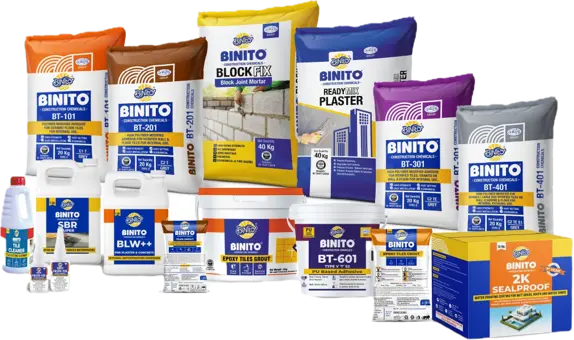
Binito Construction Chemicals supports informed construction-material selection through appropriate product information and technical guidance. Explore the verified Binito tile adhesive range and consult the relevant technical data sheet to identify a suitable solution for your project.
Disclaimer: This article is intended for general educational purposes. Product suitability, coverage, and installation requirements vary. Always consult the latest product technical data sheet and follow applicable standards and project specifications.